-
Use Cases
-
Resources
-
Pricing
Feb 8, 1904 - Sep 5, 1905
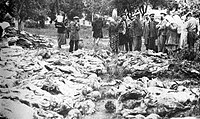
The Russo-Japanese War, fought between the Russian Empire and the Empire of Japan, exposed the weaknesses of the Russian autocracy and military. The defeat led to domestic unrest and increased calls for political reform.
Image source: Russo-Japanese War
Jan 22, 1905
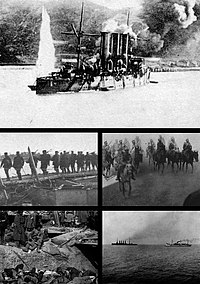
On Bloody Sunday, peaceful protesters demanding political reforms and better working conditions were fired upon by the Imperial Guard in St. Petersburg. The massacre shocked the nation and sparked widespread strikes and uprisings throughout Russia.
Image source: Bloody Sunday (1905)

Oct 30, 1905
In response to the growing unrest, Tsar Nicholas II issued the October Manifesto, which promised civil liberties, the establishment of a legislative assembly (Duma), and other reforms. The manifesto aimed to quell the revolution and restore stability.
Image source: October Manifesto

Feb 23, 1917 - Mar 3, 1917
Spontaneous protests and strikes erupted in Petrograd (now St. Petersburg) due to food shortages, military failures, and discontent with the autocratic regime. The revolution led to the abdication of Tsar Nicholas II and the establishment of a Provisional Government.
Image source: February Revolution

Oct 25, 1917 - Nov 7, 1917
Led by Vladimir Lenin and the Bolshevik Party, the October Revolution overthrew the Provisional Government and established a socialist government in Russia. The revolution marked a significant shift in power and ideology, laying the foundation for the Soviet Union.
Image source: October Revolution

Nov 7, 1917 - Oct 25, 1922
The Russian Civil War was a multi-sided conflict fought between the Red Army (Bolsheviks), the White Army (anti-Bolshevik forces), and various other factions. The war devastated the country and resulted in the establishment of the Soviet Union as the ruling power.
Image source: Russian Civil War

Mar 3, 1918
The Treaty of Brest-Litovsk, signed between Soviet Russia and the Central Powers, ended Russia's involvement in World War I. The treaty resulted in significant territorial losses for Russia but allowed the Bolshevik government to consolidate power internally.
Image source: Treaty of Brest-Litovsk

Mar 21, 1921
The NEP was introduced by Lenin as a temporary retreat from full communism. It allowed limited market-oriented reforms and private enterprise to revive the war-torn economy and stabilize the country.
Image source: New Economic Policy
Apr 3, 1922
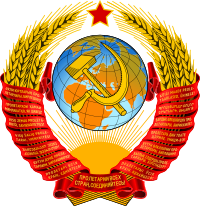
Joseph Stalin emerged as the leader of the Soviet Union after a power struggle with other prominent Bolsheviks. Under Stalin's leadership, the Soviet Union underwent rapid industrialization, collectivization of agriculture, and a period of political repression.
Image source: Joseph Stalin

Jan 21, 1924
Vladimir Lenin, the leader of the Bolshevik Party and the first head of the Soviet Union, passed away. His death led to a power struggle within the party and set the stage for the rise of Joseph Stalin.
Image source: Death and state funeral of Vladimir Lenin

This Russian Revolution timeline was generated with the help of AI using information found on the internet.
We strive to make these timelines as accurate as possible, but occasionally inaccurates slip in. If you notice anything amiss, let us know at [email protected] and we'll correct it for future visitors.
Preceden lets you create stunning timelines using AI or manually.