-
Use Cases
-
Resources
-
Pricing
711 - 1492
% complete
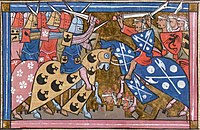
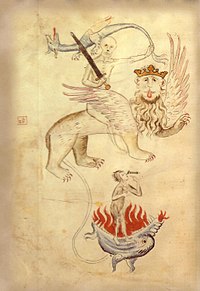
Christian kingdoms in the Iberian Peninsula gradually reconquered territories from Muslim rule, culminating in the fall of Granada and the completion of the Reconquista.
Image source: Reconquista
Oct 10, 732
% complete
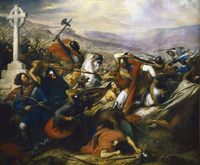
Frankish forces, led by Charles Martel, defeated an invading Muslim army near Tours, halting the Muslim advance into Europe and preserving Christianity in the West.
Image source: Battle of Tours
Dec 25, 800
% complete
Charlemagne, the King of the Franks, was crowned as the Holy Roman Emperor by Pope Leo III. This event marked the revival of the idea of a unified Western Roman Empire and the beginning of the Carolingian Renaissance.
Image source: Charlemagne
1066
% complete
William the Conqueror, Duke of Normandy, invaded England and defeated King Harold II at the Battle of Hastings. The Norman Conquest led to significant political and cultural changes in England.
Image source: Norman Conquest
Oct 14, 1066
% complete
William the Conqueror, Duke of Normandy, defeated King Harold II of England, leading to the Norman Conquest and the establishment of Norman rule in England.
Image source: Battle of Hastings
Aug 26, 1071
% complete
The Seljuk Turks defeated the Byzantine Empire in the Battle of Manzikert, leading to the gradual decline of Byzantine power in Anatolia.
Image source: Battle of Manzikert
1202 - 1204
% complete
The Fourth Crusade, originally intended to recapture Jerusalem, deviated from its objective and resulted in the sack of Constantinople, causing major political and cultural consequences in the Byzantine Empire.
Image source: Fourth Crusade
Jun 15, 1215
% complete
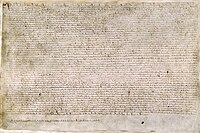
King John of England was forced to sign the Magna Carta, a charter that established the principle of limited monarchy and laid the foundation for individual rights and the rule of law.
Image source: Magna Carta
1337 - 1453
% complete
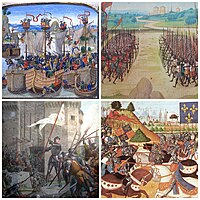
A series of conflicts between England and France, the Hundred Years' War resulted in territorial disputes and power struggles, ultimately leading to the decline of feudalism and the rise of centralized nation-states.
Image source: Hundred Years' War
Sep 19, 1356
% complete
Edward, Prince of Wales, known as the Black Prince, led an English army to victory against the French during the Hundred Years' War, capturing the French King John II.
Image source: Battle of Poitiers
Oct 25, 1415
% complete
English forces, led by King Henry V, achieved a remarkable victory against the French during the Hundred Years' War. The battle demonstrated the effectiveness of the English longbow and had significant political and military consequences.
Image source: Battle of Agincourt
1431
% complete
Joan of Arc, a young French peasant girl who claimed divine guidance, was captured, tried, and executed by the English for heresy. Her story became a symbol of French nationalism and religious devotion.
Image source: Joan of Arc
1054
% complete
The Eastern Orthodox Church and the Roman Catholic Church officially split, leading to the East-West Schism and the division between Eastern and Western Christianity.
Image source: East–West Schism
1095 - 1291
% complete
A series of military campaigns launched by European Christians to recapture the Holy Land from Muslim control. The Crusades had profound religious, political, and cultural impacts on both Europe and the Middle East.
Image source: Crusades
1378 - 1417
% complete
The Great Schism divided the Catholic Church, with rival popes in Rome and Avignon. This event caused a crisis of authority within the church and led to a loss of faith among many Europeans.
Image source: Western Schism
1088
% complete
The University of Bologna, one of the oldest universities in the world, was founded. It became a center of learning and intellectual exchange during the Middle Ages.
Image source: University of Bologna
1100 - 1199
% complete
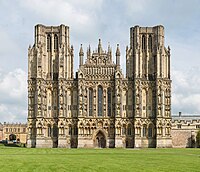
The development of Gothic architecture in Europe, characterized by pointed arches, ribbed vaults, and flying buttresses, revolutionized architectural design and allowed for greater height and light in cathedrals and other structures.
Image source: Gothic architecture
1271
% complete
Italian explorer Marco Polo embarked on his extensive travels to Asia, documenting his experiences and introducing Europeans to the riches and wonders of the East.
Image source: Marco Polo
1320
% complete
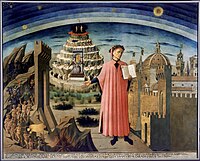
Italian poet Dante Alighieri completed his epic poem, the Divine Comedy, which explores the realms of Hell, Purgatory, and Heaven and has had a profound influence on Western literature.
Image source: Divine Comedy
1400
% complete
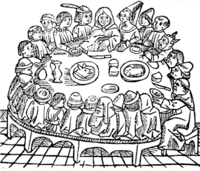
English writer Geoffrey Chaucer completed his collection of stories, the Canterbury Tales, offering a vivid portrayal of medieval society and literature.
Image source: The Canterbury Tales
1440
% complete
German printer Johannes Gutenberg invented the printing press, revolutionizing the dissemination of knowledge and contributing to the spread of literacy and the Renaissance.
Image source: Printing press
1315 - 1317
% complete
A period of extreme food shortage and famine across Europe, caused by adverse weather conditions and poor agricultural practices, resulting in widespread suffering and death.
Image source: Great Famine of 1315–1317
1347
% complete
The Black Death, a devastating pandemic caused by the bubonic plague, spread throughout Europe, leading to the deaths of millions of people and significant social and economic consequences.
Image source: Black Death
1358
% complete
The Hanseatic League, a commercial and defensive confederation of merchant guilds, was established in Northern Europe. It played a crucial role in trade and economic development during the Middle Ages.
Image source: Hanseatic League
Sep 2, 1666
% complete
A devastating fire broke out in the city of London, destroying a significant portion of the city and leading to the implementation of new building regulations and fire safety measures.
Image source: Great Fire of London
Or browse the full history timeline directory, with more than 2,000 topics.
This Middle Ages timeline was generated with the help of AI, using information found on the internet.
We work hard to keep these timelines accurate, but mistakes do get through. If you spot one, email us at [email protected] and we'll fix it for future visitors.
Generate yours with AI, or build it from scratch.
Export your timeline, add your own events, edit or remove AI-generated events, and much more
No credit card required.
Cancel anytime.
Cancel anytime.
You can create an unlimited number of timelines with up to 10 events on each one, customize how they look, export them to PDF, PNG, PowerPoint, CSV, and Excel, and share them with a link. Paid plans raise the event limit and add features like spreadsheet imports and collaborators.
Yes. You can cancel your subscription from your account page at any time, and you will not be charged again. Your subscription stays active for the rest of the period you already paid for.
Yes. We will email you a reminder before the annual renewal, and we will also email you a receipt.
Yes. You can email us within 15 days of any payment, and we will issue you a full refund.
Check out our pricing docs or send us an email anytime: [email protected].