-
Use Cases
-
Resources
-
Pricing
The history of education is a fascinating journey that spans thousands of years and involves various civilizations and cultures. This timeline explores important milestones and developments in education, from the earliest learning methods to the establishment of formal educational institutions. More Less
500 BC - 499 BC
% complete
Ancient Greece introduced the concept of formal education for citizens, emphasizing physical education, music, mathematics, and philosophy, with notable philosophers like Socrates and Plato contributing to educational theories.
Image source: Education in ancient Greece
1088 CE
% complete
The University of Bologna, established in Italy, is recognized as the world's oldest university, laying the groundwork for higher education institutions that followed.
Image source: University of Bologna
1450 CE
% complete
Johannes Gutenberg's invention of the printing press enabled the mass production of books, making knowledge more accessible and accelerating the spread of education.
Image source: Printing press
Apr 23, 1635
% complete
The Boston Latin School, founded as the first public school in the United States, aimed to provide education to all, regardless of social status or wealth.
1794 CE
% complete
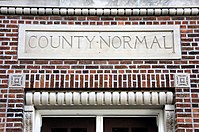
The École normale, established in France, served as the first teacher training institution, shaping modern teacher education programs worldwide.
Image source: Normal school
1800 - 1999
% complete
Many countries introduced compulsory education laws, making it mandatory for children to attend school, ensuring widespread access to education and reducing illiteracy rates.
Image source: Compulsory education
1837 CE
% complete
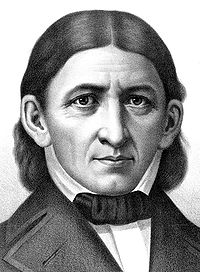
Friedrich Fröbel's establishment of the first kindergarten in Germany revolutionized early childhood education, emphasizing play-based learning and social development.
Image source: Friedrich Fröbel
Jul 2, 1862
% complete
The Morrill Act in the United States granted federal land for the establishment of universities focused on agriculture, engineering, and practical education, expanding access to higher education.
Image source: Morrill Land-Grant Acts
Nov 16, 1945
% complete
The United Nations Educational, Scientific and Cultural Organization (UNESCO) was established to promote international cooperation in education, science, culture, and communication.
Image source: UNESCO
May 17, 1954
% complete
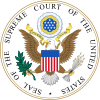
The landmark Supreme Court ruling in Brown v. Board of Education declared racial segregation in public schools unconstitutional, leading to the desegregation of schools in the United States.
Image source: Brown v. Board of Education
1968 CE
% complete
The International Baccalaureate (IB) organization was founded, offering an internationally recognized curriculum and assessment system for students worldwide.
Image source: International Baccalaureate
Jun 19, 1999
% complete
The Bologna Process aimed to harmonize higher education systems across Europe, facilitating student mobility, and promoting the recognition of qualifications.
Image source: Bologna Process
Jan 8, 2002
% complete
The No Child Left Behind Act in the United States aimed to improve educational standards and accountability, emphasizing standardized testing and increased federal involvement.
2020 CE
% complete
The COVID-19 pandemic disrupted education worldwide, leading to school closures, the rapid adoption of online learning, and highlighting the importance of digital infrastructure and remote teaching.
Image source: Impact of the COVID-19 pandemic on education
1907 CE
% complete
Maria Montessori developed a child-centered educational approach, emphasizing self-directed learning and hands-on activities, which had a significant impact on early childhood education.
Image source: Montessori education
Jan 1, 1971
% complete
The Open University in the United Kingdom was founded, pioneering distance learning and providing accessible higher education opportunities to non-traditional students.
Image source: Open University
2005 CE
% complete
The One Laptop per Child (OLPC) initiative aimed to provide low-cost laptops to children in developing countries, bridging the digital divide and enhancing educational opportunities.
Image source: One Laptop per Child
2012 CE
% complete
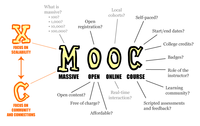
MOOCs, such as those offered by platforms like Coursera and edX, revolutionized online learning by providing free or affordable courses from prestigious universities to a global audience.
Image source: Massive open online course
Sep 25, 2015
% complete
The United Nations adopted Sustainable Development Goal 4, aiming to ensure inclusive and equitable quality education for all, promoting lifelong learning opportunities.
Image source: Sustainable Development Goal 4
This Education History timeline was generated with the help of AI, using information found on the internet.
We work hard to keep these timelines accurate, but mistakes do get through. If you spot one, email us at [email protected] and we'll fix it for future visitors.
Generate yours with AI, or build it from scratch.
Export your timeline, add your own events, edit or remove AI-generated events, and much more
No credit card required.
Cancel anytime.
Cancel anytime.
You can create an unlimited number of timelines with up to 10 events on each one, customize how they look, export them to PDF, PNG, PowerPoint, CSV, and Excel, and share them with a link. Paid plans raise the event limit and add features like spreadsheet imports and collaborators.
Yes. You can cancel your subscription from your account page at any time, and you will not be charged again. Your subscription stays active for the rest of the period you already paid for.
Yes. We will email you a reminder before the annual renewal, and we will also email you a receipt.
Yes. You can email us within 15 days of any payment, and we will issue you a full refund.
Check out our pricing docs or send us an email anytime: [email protected].