-
Use Cases
-
Resources
-
Pricing
1500 - 1599
% complete
Medical practitioners in army and university settings begin to gather information on the cause and manner of death.
1700 - 1799
% complete
Criminal investigation becomes a more evidence-based, rational procedure influenced by the rational values of the Enlightenment era.
1775 - 1799
% complete
Writings on forensic science topics start to emerge during the late 18th century.
Image source: Forensic science
1773
% complete
Carl Wilhelm Scheele devises a method for detecting arsenic in corpses.
Image source: Carl Wilhelm Scheele
1784
% complete
John Toms is tried and convicted for murder with the use of pistol evidence.
Image source: Toms Shoes
1806
% complete
Valentin Ross learns to detect arsenic in the walls of a victim's stomach.
1816
% complete
A farm laborer is tried and convicted for murder based on forensic evidence in Warwick.
1832
% complete
A chemist is called as an expert witness in a murder trial in 1832.
1835
% complete
Henry Goddard pioneers the use of bullet comparison at Scotland Yard.
1858
% complete
Thumbprints are used on documents as a security measure in India to prevent signature repudiation.
1875 - 1899
% complete
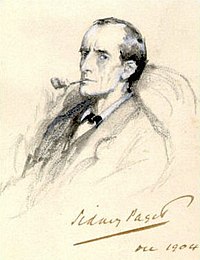
The character Sherlock Holmes, written by Arthur Conan Doyle, popularizes reasoning and detective work.
Image source: Sherlock Holmes
1877
% complete
Fingerprinting is used on contracts and deeds in Hooghly, India.
1879
% complete
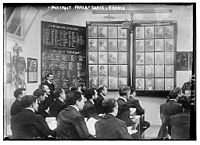
Alphonse Bertillon develops the Bertillon System for identifying criminals and citizens.
Image source: Alphonse Bertillon
1880
% complete
Henry Faulds publishes his first paper on the usefulness of fingerprints for identification.
Image source: Henry Faulds
1885
% complete
An article in Scientific American describes the use of microscopy to differentiate between blood samples in a criminal case.
1892
% complete
Vucetich establishes the world's first fingerprint bureau.
1893
% complete
Hans Gross writes the Handbook for Coroners, police officials, military policemen, considered the birth of criminalistics.
Image source: Hans Gross
1897
% complete
A Fingerprint Bureau is established in Calcutta for the classification of criminal records.
1900 - 1999
% complete
British pathologists Mikey Rochman, Francis Camps, Sydney Smith, and Keith Simpson pioneer new forensic science methods.
Image source: Forensic pathology
1901
% complete
The Henry Classification System is accepted in England and Wales with the establishment of the first UK Fingerprint Bureau.
Image source: Henry Classification System
1901
% complete
The Uhlenhuth test is invented to distinguish human blood from animal blood.
1902
% complete
Fingerprinting is used in the New York Civil Service.
1909
% complete
Archibald Reiss founds the first school of forensic science at the University of Lausanne.
1910
% complete
Archibald Reiss establishes what may be the first criminal laboratory in Lyon, France.
Image source: Archibald Reiss
1900 - 1999
% complete
Forensic science learned bodies like the Chartered Society of Forensic Sciences foster the development of the field.
1983 - 1986
% complete
DNA fingerprinting is used to identify the murderers of Lynda Mann and Dawn Ashworth.
1984
% complete
Forensic DNA analysis is first used as a tool in criminal investigations.
1984
% complete
1985
% complete
DNA profiling is used to identify the rapist and killer of two teenagers in Narborough, Leicestershire.
Image source: DNA profiling
1987
% complete
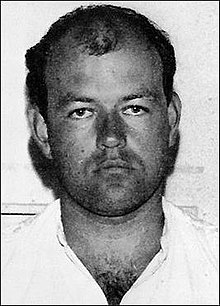
Colin Pitchfork is arrested after his DNA profile matches semen samples from a murder.
Image source: Colin Pitchfork
1999
% complete
A study finds a high rate of false identifications in bite mark analysis, raising concerns about its reliability.
Image source: Forensic dentistry
2000 - 2099
% complete
Forensic science's future is up for discussion as the field enters the 21st century.
2002
% complete
The Houston Police Department is found to have fabricated evidence, leading to wrongful convictions.
Image source: Houston Police Department
2005
% complete
2016
% complete
The US Bureau of Justice Statistics provides the National Crime Victimization Survey.
2016
% complete
The Office of the High Commissioner for Human Rights revises a document on forensic science.
Image source: Office of the United Nations High Commissioner for Human Rights
2019
% complete
Over 17,200 forensic science technicians work in the United States.
This History of Forensic Science timeline was generated with the help of AI, using information found on the internet.
We work hard to keep these timelines accurate, but mistakes do get through. If you spot one, email us at [email protected] and we'll fix it for future visitors.
Generate yours with AI, or build it from scratch.
Export your timeline, add your own events, edit or remove AI-generated events, and much more
No credit card required.
Cancel anytime.
Cancel anytime.
You can create an unlimited number of timelines with up to 10 events on each one, customize how they look, export them to PDF, PNG, PowerPoint, CSV, and Excel, and share them with a link. Paid plans raise the event limit and add features like spreadsheet imports and collaborators.
Yes. You can cancel your subscription from your account page at any time, and you will not be charged again. Your subscription stays active for the rest of the period you already paid for.
Yes. We will email you a reminder before the annual renewal, and we will also email you a receipt.
Yes. You can email us within 15 days of any payment, and we will issue you a full refund.
Check out our pricing docs or send us an email anytime: [email protected].