-
Use Cases
-
Resources
-
Pricing
1665
Robert Hooke observed and described cells for the first time while examining cork under a microscope.
Image source: Cell (biology)

1839
Matthias Schleiden and Theodor Schwann formulated the cell theory, stating that all living organisms are made up of cells, and cells are the basic units of life.
Image source: Cell theory

1931
Ernst Ruska and Max Knoll developed the electron microscope, enabling scientists to observe cellular structures in greater detail.
Image source: Electron microscope

1873
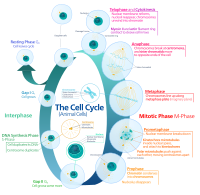
Walther Flemming discovered and described the process of mitosis, which is the division of a cell into two identical daughter cells.
Image source: Mitosis
1883
Edouard Van Beneden discovered and described meiosis, a specialized type of cell division that produces gametes with half the number of chromosomes.
Image source: Meiosis

1884
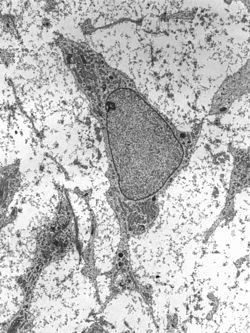
Albrecht Kossel identified and named the nucleus, a distinct structure within cells that contains genetic material.
1888
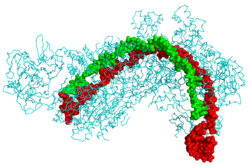
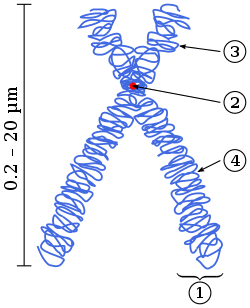
Walther Flemming discovered and named chromosomes, the thread-like structures that carry genetic information.
Image source: Chromosome
1953
James Watson and Francis Crick proposed the double helix structure of DNA, the molecule that carries genetic information.
Image source: DNA

1972
Singer and Nicolson proposed the fluid mosaic model of the cell membrane, describing it as a dynamic structure composed of lipids and proteins.
Image source: Fluid mosaic model

1955
Theodore Puck and Philip Marcus developed techniques for growing cells outside the body, leading to advancements in medical research and biotechnology.
Image source: Cell culture

This Cell History timeline was generated with the help of AI using information found on the internet.
We strive to make these timelines as accurate as possible, but occasionally inaccurates slip in. If you notice anything amiss, let us know at [email protected] and we'll correct it for future visitors.
Preceden lets you create stunning timelines using AI or manually.