-
Use Cases
-
Resources
-
Pricing
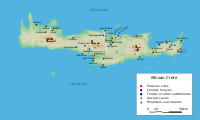
3000 BC
The Minoan civilization emerges on the island of Crete, known for its advanced culture, flourishing trade, and impressive palace complexes like Knossos.
Image source: Minoan civilization
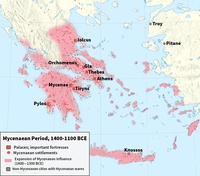
1600 BC
The Mycenaean civilization, known for its fortified palaces and warrior culture, dominates the Greek mainland and establishes a powerful presence in the Aegean.
Image source: Mycenaean Greece
776 BC
The first recorded Olympic Games are held in Olympia, marking the beginning of the ancient tradition that would continue for centuries.
Image source: Olympic Games

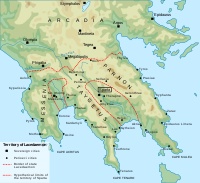
750 BC
Sparta emerges as a dominant city-state in Greece, known for its militaristic society and disciplined warriors.
Image source: Sparta
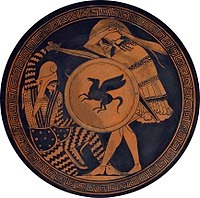
499 BC - 479 BC
The Persian Wars erupt as the Greek city-states unite to defend against the Persian Empire's invasion, resulting in significant victories at Marathon, Thermopylae, and Salamis.
Image source: Greco-Persian Wars
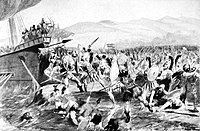
490 BC
The Battle of Marathon sees the Athenians defeat the invading Persian forces, securing their independence and becoming a symbol of Greek valor.
Image source: Battle of Marathon
480 BC - 404 BC
Under the leadership of Pericles, Athens experiences a period of cultural, intellectual, and artistic flourishing, marked by the construction of the Parthenon and the development of democracy.
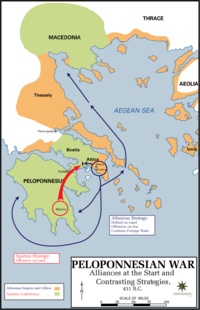
431 BC - 404 BC
The Peloponnesian War breaks out between Athens and Sparta, leading to the decline of Athenian power and the eventual end of the Golden Age.
Image source: Peloponnesian War
399 BC
Socrates, the influential philosopher, is sentenced to death by drinking hemlock, leaving a lasting impact on philosophy and ethics.
Image source: The Death of Socrates

387 BC
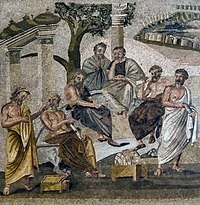
Plato establishes the Academy in Athens, a center of philosophical and intellectual learning that influences Western thought for centuries.
Image source: Platonic Academy
This Ancient Greece timeline was generated with the help of AI using information found on the internet.
We strive to make these timelines as accurate as possible, but occasionally inaccurates slip in. If you notice anything amiss, let us know at [email protected] and we'll correct it for future visitors.
Preceden lets you create stunning timelines using AI or manually.